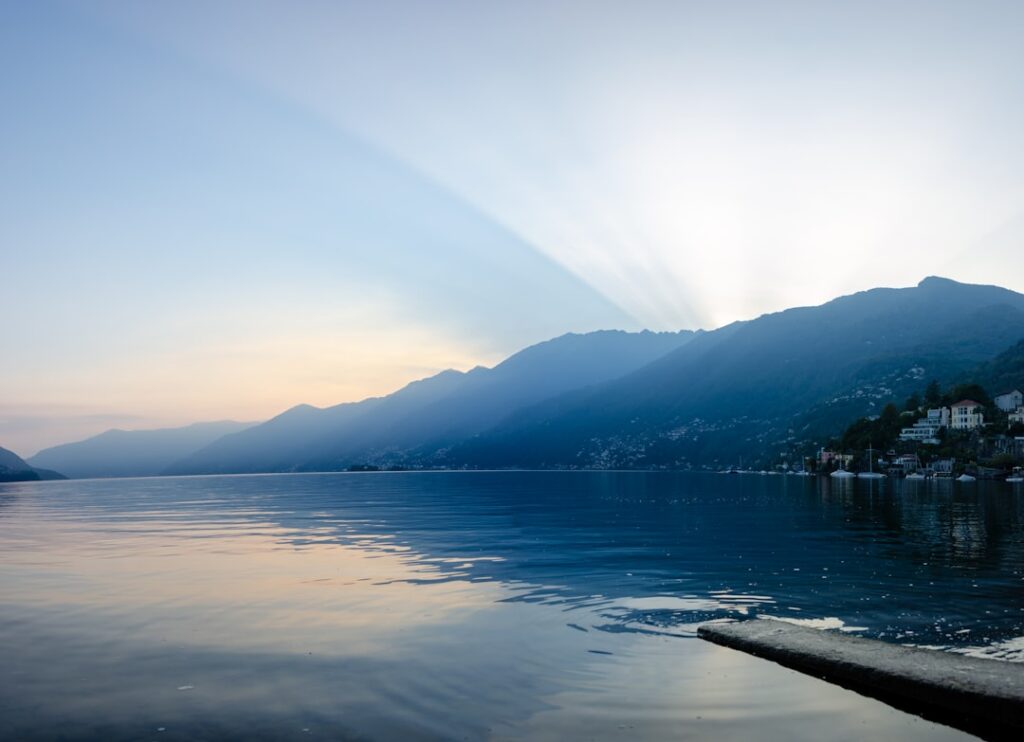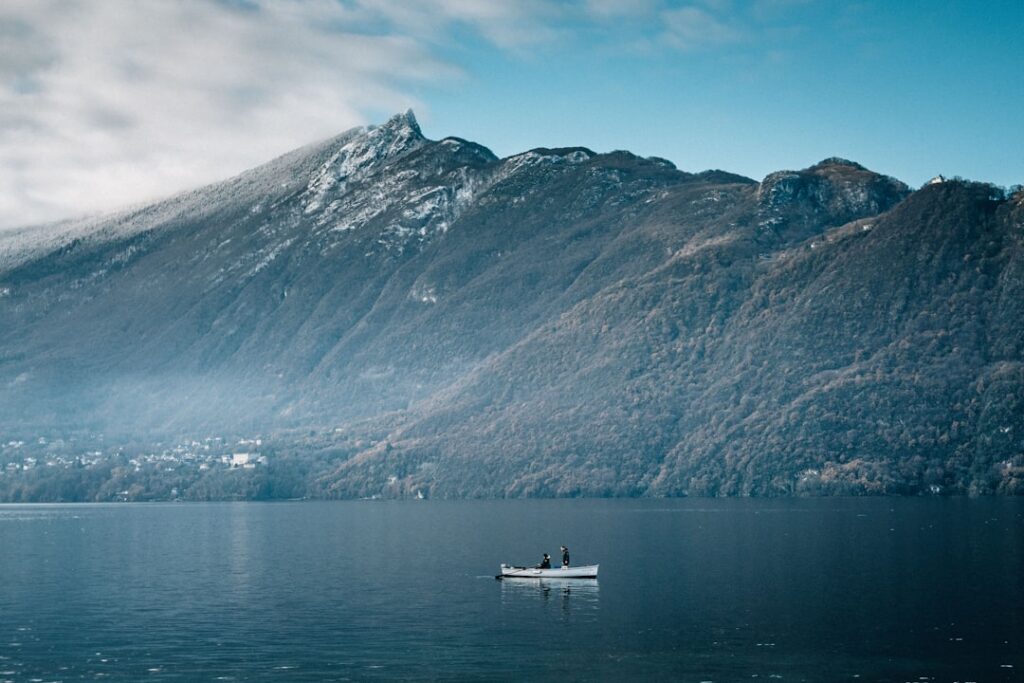






Introduction — Twilight Palette: why Lake Maggiore is a photographer’s paradise
Lake Maggiore, straddling Piedmont and Lombardy, stretches like a shifting watercolor, catching the sun as it slips behind the Alps and reflecting it across often deep-blue water. For photographers—especially at dusk—this lake is an endless palette: golden reflections, baroque island silhouettes, pastel lakeside villages and medieval towers casting long shadows. This guide, « Twilight Palette: Secret Photo Spots on Lake Maggiore, » is designed to give you a practical, immersive selection of locations, addresses, times and technical and local tips so you can plan memorable shoots with solid logistics.
We cover iconic sites (the Borromean Islands, botanical gardens, medieval rocche) and more off-the-beaten-path corners (natural amphitheaters, small pebble beaches, hidden terraces)—all chosen for their sunset and blue-hour potential. Each spot includes exact addresses, access or transport prices in euros, typical opening or service times, plus composition, lighting and kit-management tips. Because Lake Maggiore attracts significant tourist traffic, nailing a dusk session is often about timing: you’ll find precise recommendations on when to arrive, how to avoid crowds, where to park and how to use natural lines (shores, piers, jetties) to structure your shots.
You’ll also get practical advice: lens choices (wide-angle for landscapes, telephoto to compress islands and the water), rough settings for golden and blue hour, and tricks to stabilize your camera on uneven or windy ground. We list transport options (ferries, scenic roads, coastal trails) and estimated costs—like boat crossings between Stresa and the Borromean Islands, admission to botanical gardens, or entrance fees for medieval rocche. Finally, the guide covers landscape-photographer ethics: respect for sites, closing times and discreet behavior in inhabited or natural areas.
Whether you’re an enthusiastic hobbyist posting to social media or a pro on an editorial assignment, the locations below were picked for their dusk light quality, accessibility and visual variety. Pack a sturdy tripod, graduated NDs and spare batteries: once dusk settles over Lake Maggiore, it can hold your attention for hours.
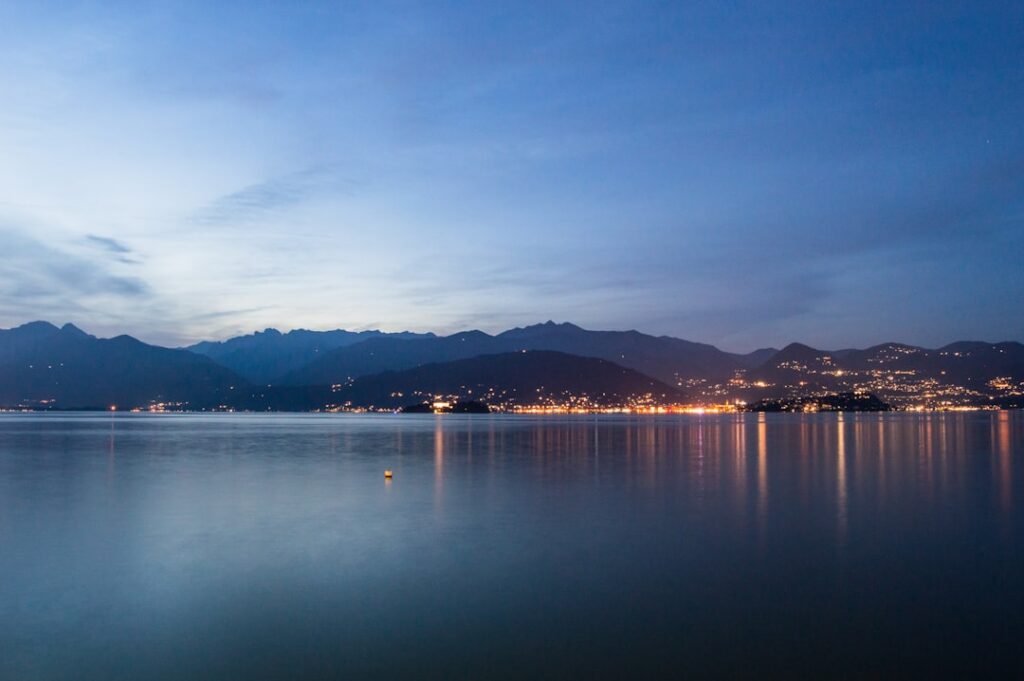
Stresa and the Borromean Islands — baroque compositions and island silhouettes
Stresa (Lungolago Marconi, 28838 Stresa VB, Italy) is often the first gateway for photographing the southwest shore of Lake Maggiore. The lakeside offers a long paved promenade, ideal for capturing sunset colors mingling with yachts and elegant facades. To maximize the twilight effect, set up along Lungolago Marconi between Punta della Castagnola and the ferry berth: the golden hour then lights the buildings while Isola Bella’s silhouette drifts into the evening haze. Recommended arrival: at least 45–60 minutes before sunset to set up your tripod and test frames.
The Borromean Islands—Isola Bella (Isola Bella, 28838 Stresa VB, Italy), Isola dei Pescatori (Isola Superiore – Isola dei Pescatori, 28838 Stresa VB, Italy) and Isola Madre—are must-see motifs. Take the vaporetto from the Stresa Ferry Terminal (Porto di Stresa, Lungolago Matteotti, 28838 Stresa VB, Italy). Indicative price: one-way island tickets around €8–12 (varies by season and operator), day passes for multiple islands roughly €20–28. Typical schedules: regular services 08:30–19:30 in high season (check seasonal timetables). Tip: for dusk shots, favor the crossing to Isola dei Pescatori (the fishing village) to capture waterfront life, or Isola Bella for its gardens and palace that subtly light up toward evening.
Isola Bella (simplified address: Isola Bella, 28838 Stresa VB, Italy)—the Palazzo Borromeo and terraced staircases provide strong lines and symmetry for composition; garden access is paid: entry for Palazzo e Giardini Borromeo about €13–15 for adults, typically open 09:00–18:00 (high season). If your goal is a silhouette at dusk, station yourself on the Stresa shoreline or hire a small boat (book ahead) and use a telephoto (70–200mm) to bring architectural details closer without compromising the lake perspective.
Isola dei Pescatori (address: Isola Superiore – Isola dei Pescatori, 28838 Stresa VB, Italy) is the most authentic island: narrow lanes, waterfront restaurants (e.g. Ristorante La Rampolina, Via G. Motta 10, Isola dei Pescatori—menus vary, dishes €15–30) and a photogenic pier for human silhouettes at sunset. Best framing: use shallow depth of field to separate a foreground subject (a fisherman, a café chair) and capture the sky’s color gradation in the background.
Local tip: arrive early in the evening to enjoy soft light and still-open cafés, but avoid the 18:00–19:30 window in July–August when tourist crowds can clog the banks. Parking in Stresa: paid spaces along the Lungolago and in the center (blue zones, rates around €1–2/hour depending on location). For less-common images, explore Punta Castagnola for dramatic backlighting and natural arches formed by the shoreline.
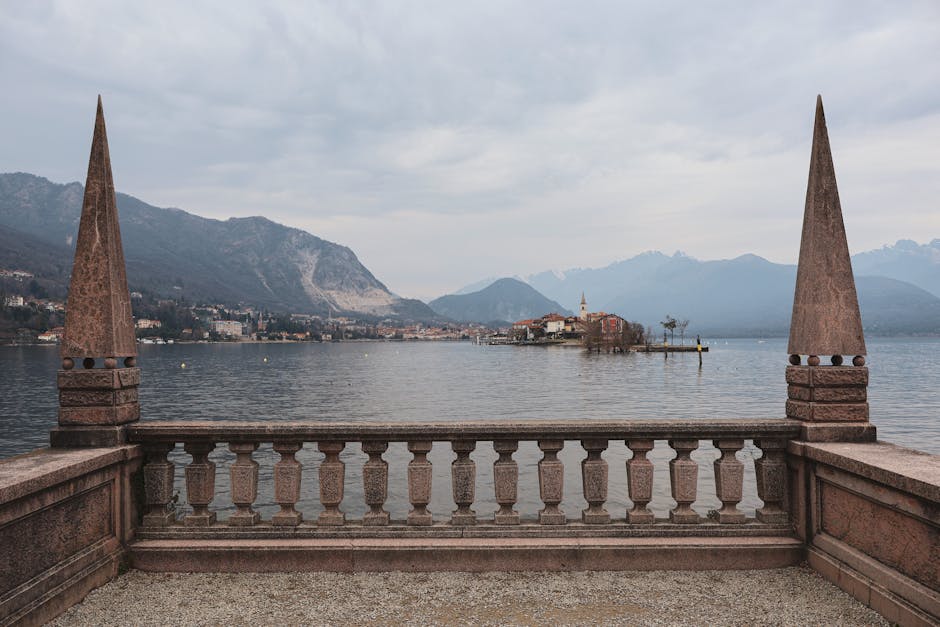
Verbania, Villa Taranto and the botanical gardens — vegetal tones at dusk
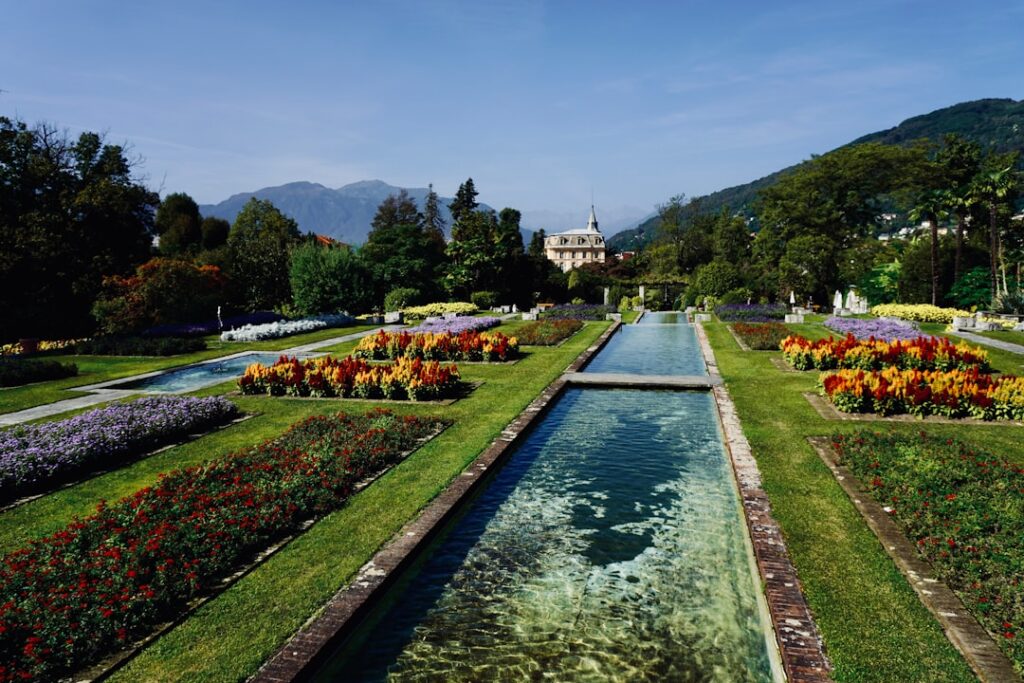
Verbania-Pallanza (Viale Papa Giovanni XXIII, 2, 28922 Verbania VB, Italy) is home to the famous Giardini Botanici Villa Taranto, a treasure for photographers seeking a dusk palette that mixes foliage and soft light. Exact address: Viale Papa Giovanni XXIII, 2, 28922 Verbania VB. Indicative entry fee: €13.50 per adult (2024/2025 rate subject to change). Hours: typically 08:30–18:00 from April to October (seasonal closures vary; check the official site before visiting). The gardens often close an hour or two before dusk—so to catch the late light, plan an afternoon visit and then head to the Pallanza shore for sunset shots.
Villa Taranto is ideal for sequences where vegetation meets low-angle light: rhododendron beds, symmetrical paths and reflective basins. For dusk, favor areas near the lake and terraces facing west, where the setting rays bring out textures and relief. Recommended techniques: use a polarizer to deepen greens and cut water glare, then switch to long exposures (ND) as light fades to smooth pond surfaces and achieve mirror-like reflections.
After Villa Taranto closes, the Pallanza lakeside (Piazza della Chiesa, 28922 Verbania VB) offers great compositions with the church, wooden jetties and moored boats. Keep your ISO low (100–200) and prefer 24–70mm focal lengths to capture both garden scale and floral detail. A prime spot for dusk portraits: tree-lined paths where light filters in bands, creating natural bokeh in the background.
Practical tips: parking near the gardens—Parcheggio Villa Taranto, Viale G. Mazzini, Verbania (paid, about €1–2/hour). In high season, allow 1–2 hours for the gardens plus 30–45 minutes along the lakeside for sunset. If you want aerial perspectives, always check local drone regulations; Verbania often has restrictions around historic sites and botanical gardens.
The eastern shore and Santa Caterina del Sasso — cliffs, hermitage and mineral panoramas
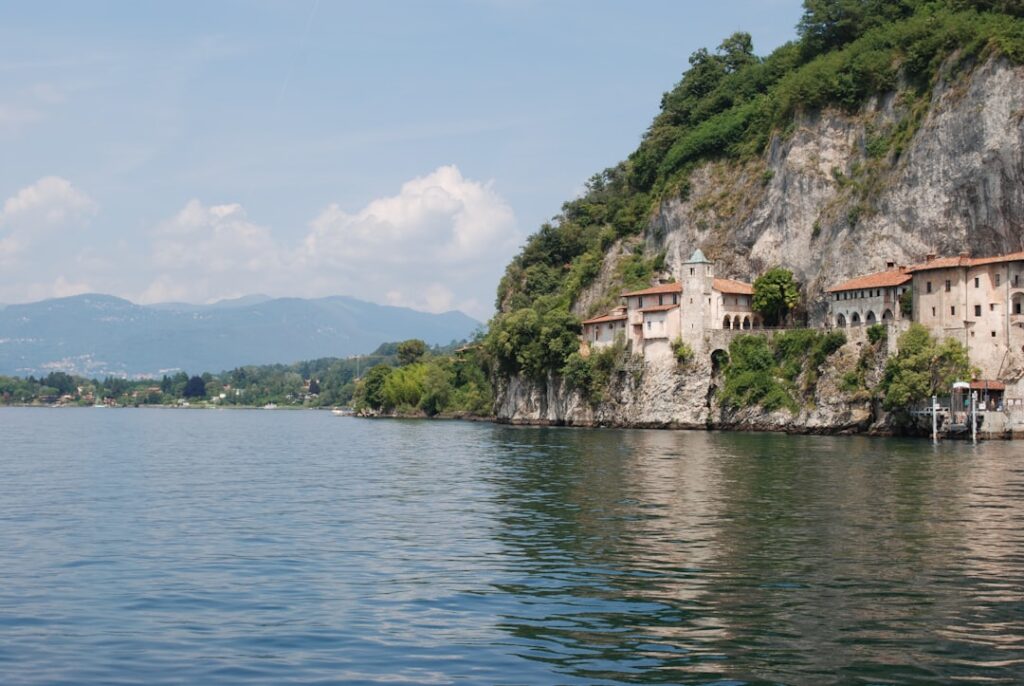
The eastern shore of Lake Maggiore shows wilder contrasts: limestone cliffs, small coves and elevated viewpoints that produce dramatic sunset panoramas. One of the most powerful spots is the Eremo di Santa Caterina del Sasso, perched on a cliff at Leggiuno. Address: Hermitage of Santa Caterina del Sasso, Via alla Riva, 1, 21038 Leggiuno VA, Italy (verify local access before your visit). Typical hours: 09:00–18:00 (seasonal), and a small donation or access fee of €3–5 may be requested for upkeep (variable and sometimes free depending on management). The site can be admired from the shore or by descending to the platform at the cliff base—the evening light turns the chapel and arcades into warm silhouettes above the water.
How to get there: from Laveno-Mombello (Porto di Laveno, Piazza Marinai d’Italia, 1, 21014 Laveno-Mombello VA, Italy) you can take scheduled boats or drive via the SP69. The best photographic viewpoint for dusk is often from the opposite shore or from a small terrace near the lower parking area, as these vantage points let you capture the cliff lit obliquely with the lake in the foreground. Techniques: use a 35–85mm lens to combine architectural subject and landscape, and experiment with long exposures to smooth the water and create a dreamlike mirror effect.
Other points of interest along the eastern shore: the towns of Angera and Ranco. Rocca Borromeo di Angera (Piazza Garibaldi, 4, 21021 Angera VA, Italy) is a medieval fortress overlooking the lake—entrance around €6–10, hours 10:00–17:30 (high season). From the access path to the top you get a sweeping view perfect for compositions where the fortress frames a lake lit by the setting sun. For more rustic frames, explore the small pebble beaches below Angera, where low-angle light creates contrasts between polished stones and colorful reflections.
Local advice: the coastal road SP69 offers panoramic pull-offs and small unofficial parking spots; arrive early and obey signs. End the day safely—some steep paths to viewpoints can be slippery. Also seek out trails that lead down to small coves: these micro-areas, often overlooked, provide excellent foregrounds (pebbles, driftwood, algae) for your twilight compositions.
Villages to the north and secret coves — Cannobio, Maccagno and post-sunset calm
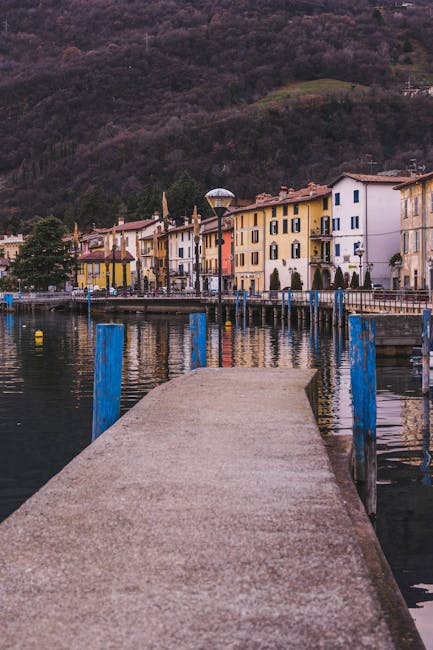
The northern part of Lake Maggiore, closer to the mountains, has a different vibe: fishing villages, colder water and often clearer water than the south, plus gentle light once the sun dips behind the peaks. Cannobio (Piazza XX Settembre, 2, 28822 Cannobio VB, Italy) is one of the most photogenic towns. The promenade along the riva offers classic frames: colorful houses mirrored in near-still water at day’s end. Parking: lots near the lungolago, blue zones with variable rates (€1–2/hour). Composition idea: include a rowboat or lamppost in the foreground to structure the image and lead the eye to the horizon.
Maccagno con Pino e Veddasca (via Lago, Maccagno, 21010 Varese) offers pebble coves and intimate beaches—often empty outside peak swimming hours. Staircase alleys down to the lake are great for environmental portraits at dusk: tight frames, side light, soft backgrounds and warm tones. Don’t overlook coastal footpaths; they sometimes open onto almost-private bays lined with multicolored rocks that really come alive at twilight.
For wilder photos, take the trails from Laveno up toward Monte S. Quirico (waymarked hiking routes): a mid-elevation viewpoint gives angled lines between branches and ridges, with the lake as a backdrop—perfect for layered foreground-midground-background frames. Transport and costs: north–south ferry routes frequently serve Laveno, Maccagno and Cannobio—fares €6–15 depending on distance, schedules 08:00–19:00 in season.
Technical tips: up north the color temperature can be cooler, emphasizing blues—correct white balance in RAW or use auto but check in post. If you’re shooting scenes with transparent water and foreground rocks, a polarizer will increase contrast and cut unwanted reflections. For nightlong exposures, Cannobio works well: café lights trail as luminous streaks across the lake’s surface.
Conclusion — plan your sessions, respect the places and compose your palette
Lake Maggiore is a rich, varied playground for dusk photographers: every shore offers its own palette of colors, textures and silhouettes. From the baroque refinement of the Borromean Islands to the mineral cliffs of Santa Caterina del Sasso, via the ordered gardens of Villa Taranto and the wild coves of the north, you can build a cohesive series that narrates the shift from day to night. Plan shoots around transport (ferries) and opening hours (gardens, monuments), check costs in advance (garden entries ≈ €13–15, rocca ≈ €6–10, boat crossings ≈ €8–15) and watch the weather—the light on the lake can change in minutes.
Some practical and ethical reminders: respect opening times, avoid entering private or protected areas and leave no trace. In urban and inhabited island settings, be discreet: don’t monopolize quays or small squares during busy hours and always ask politely before photographing people. For equipment, favor a solid tripod, polarizers and graduated NDs, plus spare batteries—fading light and long exposures can quickly drain power.
Finally, experiment: pair wide sunset shots with textured close-ups (pebbles, boat fittings, fortress stones), try multiple exposures for high-dynamic panoramas and don’t hesitate to revisit the same spot in different seasons to catch how light and foliage transform. Lake Maggiore’s variety gives you everything you need to build a cohesive “twilight palette”—now choose your tripod spot and let the light do the rest.