





Introduction — Why Photograph Sunsets on Lake Maggiore
Lake Maggiore, straddling Piedmont and Lombardy in Italy and bordered to the north by Switzerland’s Ticino canton, is one of Europe’s most photogenic lakes. Its shores alternate between picturesque villages, botanical gardens, inhabited islands and medieval castles — all ingredients for perfect dusk compositions. The golden reflections on the water, the silhouettes of palazzi and lazily rolling hills, and the gradual lighting up of village windows make every sunset unique. For photographers, from enthusiastic beginners to seasoned pros, the lake offers endless variety: long lenses to isolate details, wide angles to capture vast water expanses, and telephoto lenses to compress islands against the mountains.
Shooting Lake Maggiore at dusk requires more than good gear: you need to know the spots that look best in the light, ferry timetables so you’re in the right place at the right moment, and local tricks to avoid crowds or make the most of rapidly changing conditions. This hands-on, immersive guide gives you exact locations, addresses, opening hours, prices and technical tips to capture those blazing moments. You’ll also find framing suggestions, recommended equipment (ND filters, tripod, remote release), and pointers on how to use the soft evening light to flatter the Baroque architecture of the Borromean Islands, the rocky outline of the Mottarone, or the ancient towers of Cannobio and Angera.
Dusk isn’t a fixed time: it changes with the season and latitude. In spring and summer, the golden hour can stretch over an hour, offering gradual transitions that are perfect for experimenting. In autumn and winter, sunsets may be shorter but often more intense and contrasty. Weather quirks around the lake — wind and morning or evening mist — can create dramatic atmospheres: pink haze that erases detail, or a gentle breeze that adds small ripples for interesting water texture.
This guide is built to be useful in the field: each site comes with the exact address, opening hours when applicable, indicative prices in euros, and practical tips for photographers (best vantage points, recommended arrival times, possible compositions). I’ve also included logistics suggestions — parking, boat crossings, and alternatives for busy periods. Visual markers and image prompts 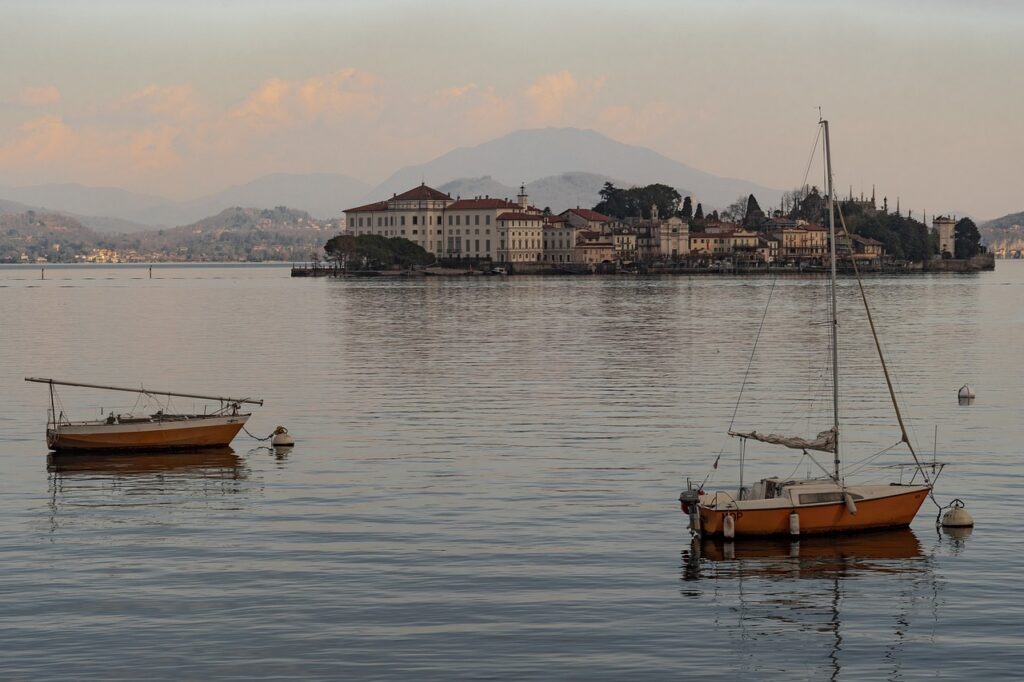 are sprinkled throughout to inspire your framing before you head out.
1. The Borromean Islands: Isola Bella and Isola dei Pescatori (Isole Borromee)
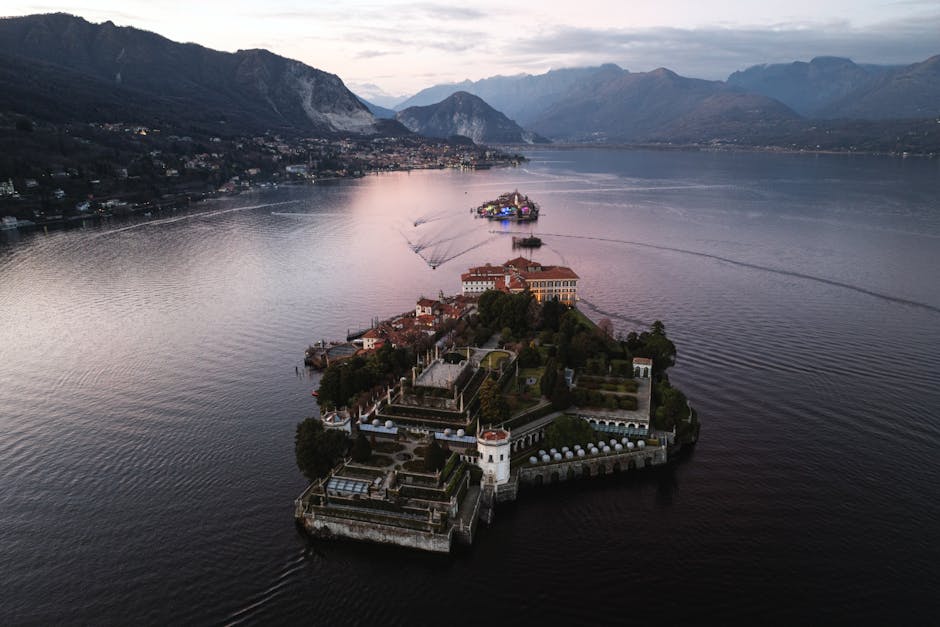
The Borromean Islands — Isola Bella, Isola Madre and Isola dei Pescatori (also called Isola Superiore) — offer outstanding viewpoints for dusk photography. Isola Bella, with its Baroque palace — the Palazzo Borromeo — and terraced gardens, catches late-day light in an incredibly photogenic way. From Stresa’s shore or from a boat, you can isolate the palace terraces against a peach-colored sky.
Address: Isola Bella, 28838 Stresa VB, Italy (Palazzo Borromeo, Isola Bella). Price: combined ticket for the Palace and gardens around €17–€20 per adult in high season (rates vary by season). Opening hours: typically 09:00–18:00 (April–October), reduced hours off-season; check the official site before visiting. Ferry: regular lines from Stresa (Porto di Stresa, Lungolago Marconi, 1, 28838 Stresa VB) — one-way fares around €6–€12 depending on route and season. It’s recommended to arrive at least 60–90 minutes before sunset to set up gear and explore palace angles.
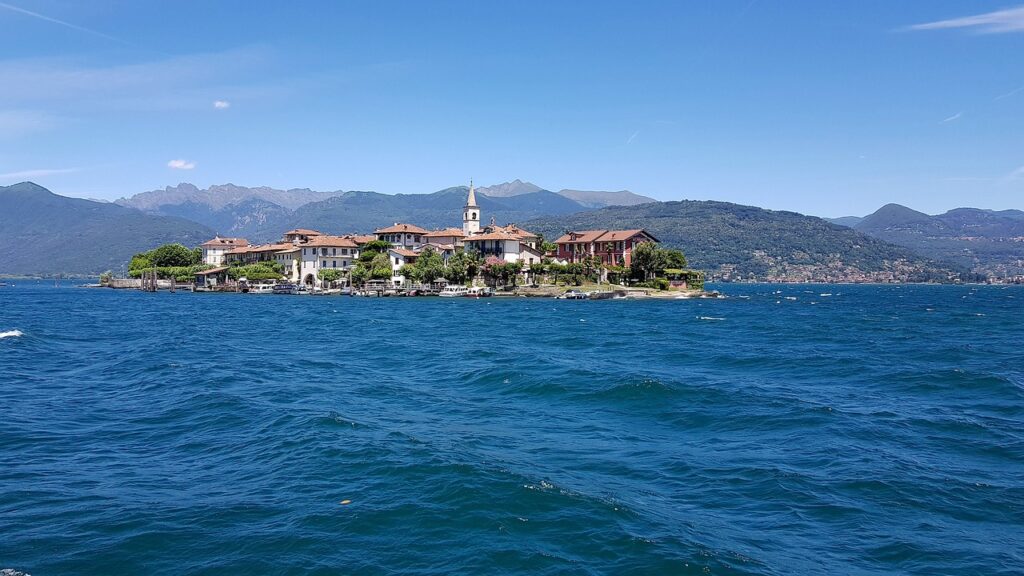
Isola dei Pescatori (Isola Superiore) is the smallest but the liveliest: narrow alleys, lakeside restaurants and small squares that buzz at dusk. Address: Isola Pescatori, 28838 Stresa VB, Italy. There’s no entry fee to wander the island; however, expect to spend €10–€30 at a restaurant if you plan to dine lakeside. The island’s quays are perfect for capturing backlit human silhouettes, traditional boats and shimmering reflections.
Photo tips: use a tripod for long exposures, a remote release or self-timer to avoid vibration, and consider a polarizing filter in the late afternoon to reduce unwanted water glare. For panoramas that include Isola Bella and the Mottarone, position yourself on Stresa’s lakeside promenade (Lungolago Marconi, 1, 28838 Stresa VB), west side, 30–45 minutes before sunset. For a higher viewpoint, the Villa Ducale promenade in Stresa (Via Marconi) offers elevated perspectives.
2. Stresa and the Lungolago Promenade — classics and varied perspectives
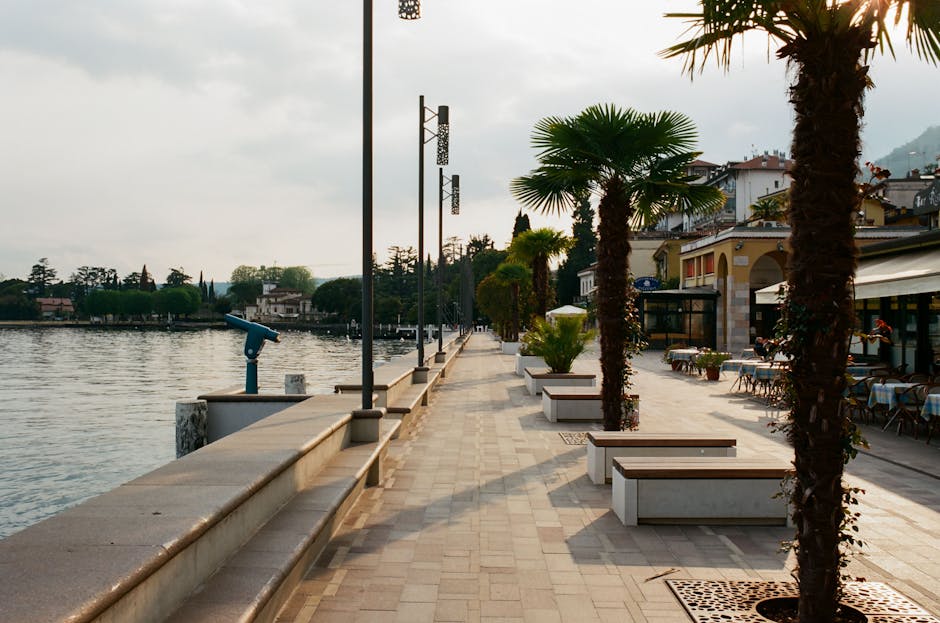
Stresa is the most popular gateway to Lake Maggiore. The lungolago promenade (Lungolago Marconi) runs along the town center, offering multiple framing options at dusk — piers, palm trees, villas from the Belle Époque era and direct views toward the Borromean Islands. Main station address: Stazione FS di Stresa, Piazza Giovanni XXIII, 28838 Stresa VB, Italy. Recommended parking: Parcheggio Lungolago (Lungolago Marconi), rates vary, often €2–€3/hour in paid central areas.
Hours: the promenade is open 24/7. For tourist services (boats, restaurants), most close between 22:00 and midnight in high season, while shops close earlier (18:00–20:00). Transport: Stresa–Isola Bella/Isola Madre/Isola dei Pescatori ferry services run from about 08:30 to 19:00/20:00, with more frequent trips in summer. Boat fares start around €6–€12 one-way depending on destination.
When shooting from Stresa, think about several framing types: palm-tree silhouettes and the bandstand against island backdrops, wide panoramas including the mountains, and architectural details of lit-up villas. Arrive 45–60 minutes before sunset to try different focal lengths. If it’s been windy during the day, wait a little after sunset — the water can calm and deliver smoother reflections.
Practical tips: set your GPS to Lungolago Marconi, 1, 28838 Stresa VB to find parking and docks easily. Lakeside restaurants (for example Ristorante La Barcaccia, Lungolago Marconi 4) often have outdoor tables: budget roughly €25–€45 per person for a full meal. If you want to escape the central crowds, head up toward Villa Ducale (Viale Regina Elena, 2, 28838 Stresa VB) or the small public park near the Madonna del Sasso monument for quieter vantage points.
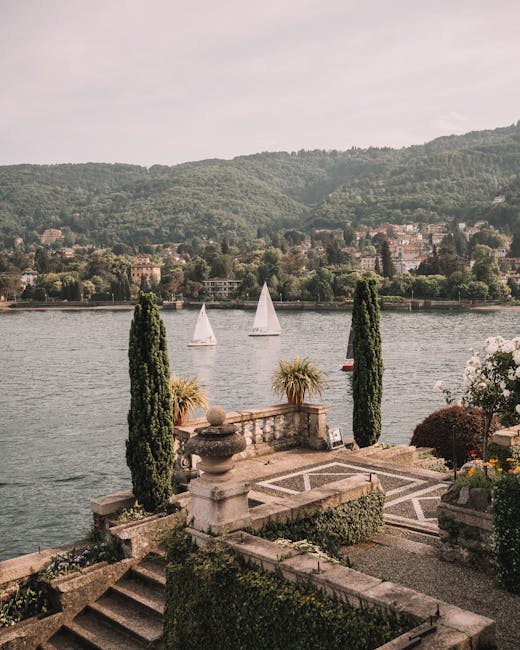
3. Verbania Pallanza and the Villa Taranto Gardens — gardens and dramatic reflections
Verbania Pallanza, on the lake’s western shore, is famous for the Villa Taranto Botanical Gardens (Giardini Botanici Villa Taranto). These lush gardens, planted with exotic species and abundant flower beds, make for striking dusk frames: blooms and foliage take on warm tones while the lake behind them becomes an orange mirror.
Address: Giardini Botanici Villa Taranto, Punta San Vito, 28922 Verbania VB, Italy. Hours: typically 09:00–18:00 (April–October), earlier closing off-season; check the official site. Price: adult ticket around €12 (2024 indicative rate), discounts for families or groups. Parking: lots near the gardens; rates vary, often €2–€5 per day.
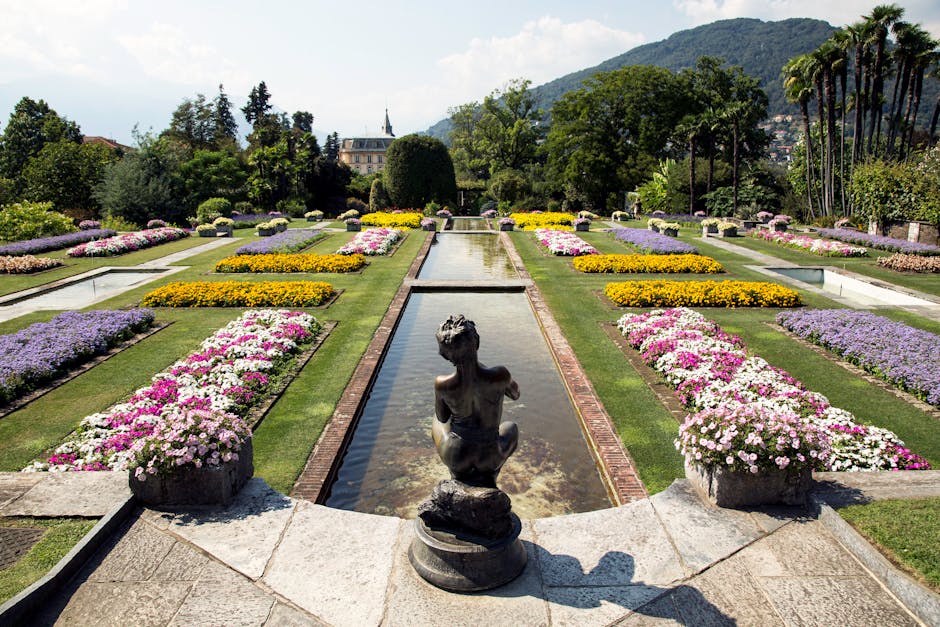
For photography, Villa Taranto offers many options: structured flower beds in the foreground with the lake as a backdrop, shaded paths leading to water features, and small bridges reflected in calm pools. Dusk, when visitors thin out, is a prime time to capture compositions without disruption. Note: the garden sometimes closes before sunset; plan your visit so you can remain until closing and be ready to raise ISO if light drops.
Around Verbania Pallanza, the Lungolago Europa promenade (Lungolago Europa, 28922 Verbania VB) lets you compose with the silhouette of Intra and the mountains. For wide compositions, include a strong foreground element (boat, rock, bench) and use a graduated filter to balance sky and water. For elevated viewpoints, the Belvedere di Suna (Via Val d’Ossola, Suna) is an excellent option just minutes by car from the center.
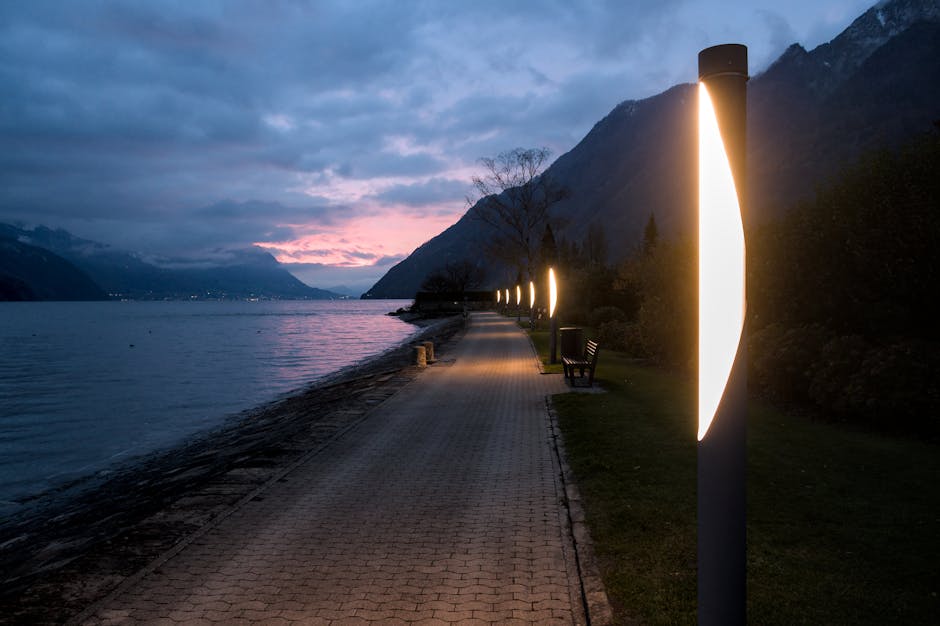
Local tips: if you plan to dine after your shoot, try Ristorante Vecchio Faggio (Via Roma 6, 28922 Verbania), budget roughly €25–€40. The parking by the gardens can fill up in high season; arrive 90 minutes before sunset to secure a spot. In low light, favor focal lengths between 24 mm and 70 mm to capture both gardens and lake, and bring a sturdy tripod for long exposures.
4. Cannero Riviera, the Castelli di Cannero and the wild shore
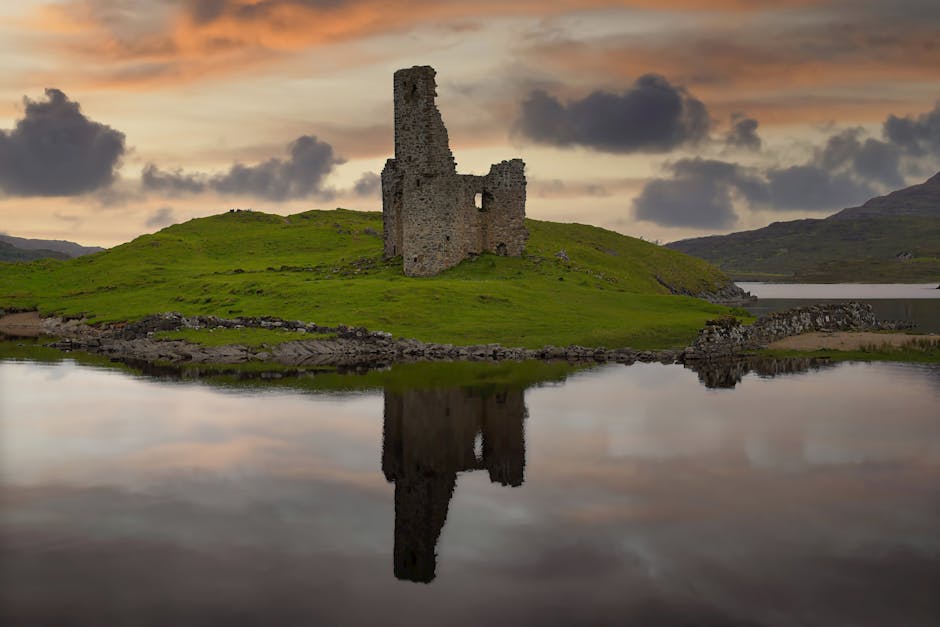
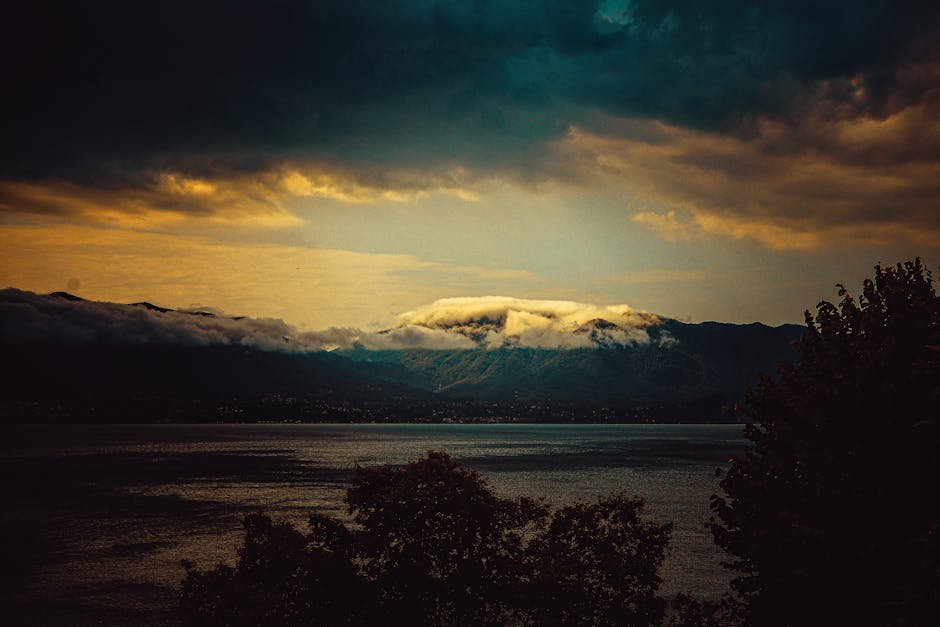
Cannero Riviera, further north on the western shore, is known for its Art Nouveau villas and small coves. The most photogenic site at dusk is likely the view of the Castelli di Cannero, two rocky islets topped with the ruins of medieval towers. The towers’ silhouettes cut superbly against a fiery sky.
Address: Castelli di Cannero (visible from Riva di Cannero), 28821 Cannero Riviera VB, Italy. Access: no landing on the islets (ruins are private/fragile); best viewed from the shore at Riva di Cannero or from a boat. Ferry/boat taxi: departures from Cannobio, Verbania or Stresa, prices vary (often €15–€30 for a guided trip or boat taxi depending on distance). Parking: via Lungolago Cannero Riviera, public parking with limited spaces in summer.
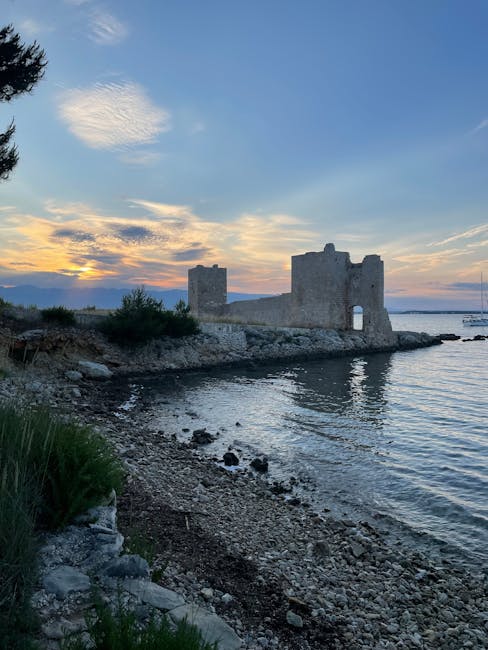
Evening light enhances the wild character of these ruins. Successful compositions contrast the dark mass of the towers with the delicacy of the sky and reflections. If you’re on a boat, ask the driver to approach to a reasonable distance so you can shoot with a telephoto (200–400 mm) without harming the site. From shore, use a 70–200 mm to isolate the towers, and a wide angle (16–35 mm) to include a chunk of coastline and its reflections.
Practical tips: for a truly spectacular sunset, choose evenings with high clouds — they catch color well. Cannero’s restaurants (for example Ristorante Il Gabbiano, Lungolago Cannero Riviera) have terraces with views; budget about €20–€35 per person. For a quieter viewpoint, head to the small public beach at Riva (Lungolago) and set up your tripod on the shoreline rocks — watch out for waves and slippery algae.
5. Mottarone and Arona — high panoramas and historic silhouettes
For panoramic sunsets encompassing the whole lake, the climb up Mottarone is a must. The summit offers 360° views over the Italian lakes and breathtaking vistas of Lake Maggiore. Funivia departure address: Funivia Stresa-Mottarone, Piazza Marconi 3, 28838 Stresa VB (or the corresponding departure station if service changes). Funivia fare: around €15–€20 round trip (indicative rates, check online). Hours: often 09:00–18:00/19:00 in summer; seasonal closures possible in winter for maintenance.
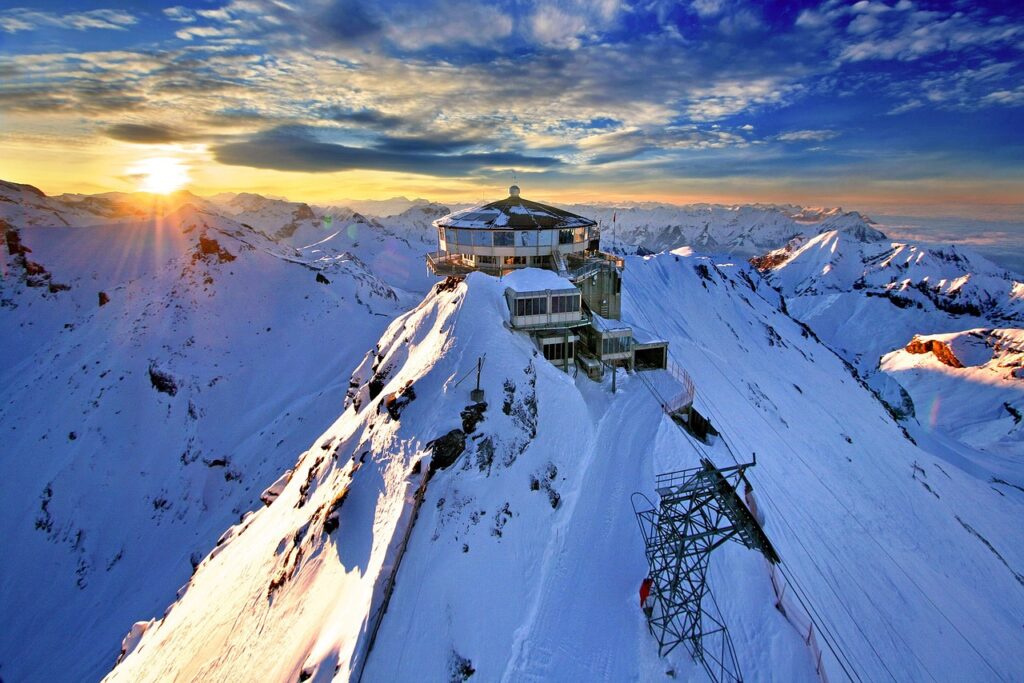
If you’re driving, there’s a road up to Mottarone (SP34/SR233) with parking near the summit. Arrive at least 60–90 minutes before sunset to place your gear and test different frames. At the top, meadows and viewpoints allow you to include foreground elements (rocks, trees, benches) and the background (the lake, islands, Alpine range). twilight light emphasizes depth of field and creates interesting long shadows.
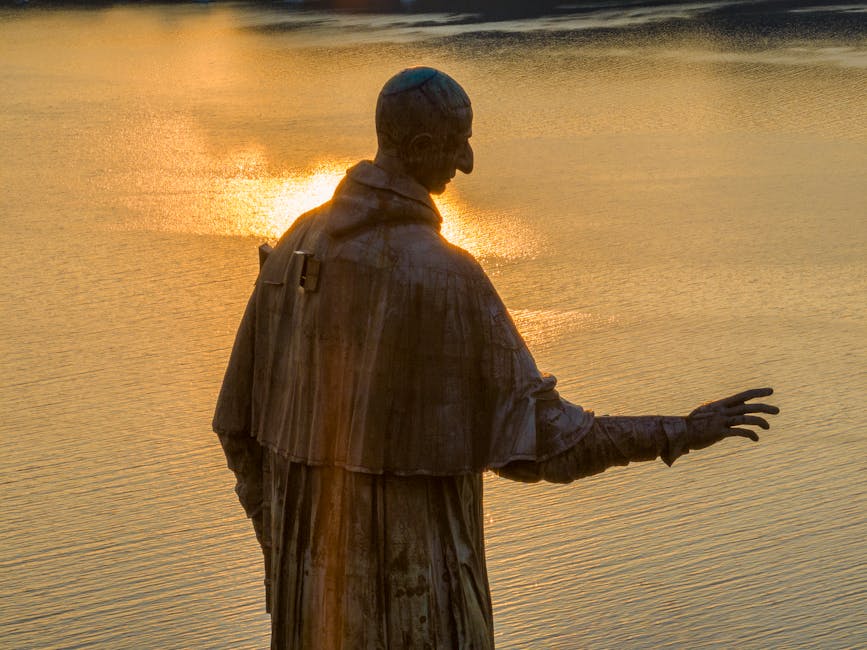
At the lake’s southwestern tip, Arona presents an urban silhouette with the Rocca Borromeo and the statue of San Carlo Borromeo. Rocca Borromeo address: Via Rocca 3, 28041 Arona NO, Italy. Hours: the Rocca is often open 09:00–19:00 depending on season; entrance fee around €6–€10. For a classic composition, place the statue of San Carlo on the right and capture warm tones over the lake. Arona’s center and its lungolago promenade (Lungolago Marconi 3, 28041 Arona) offer easy-access vantage points with cafés and nearby parking.
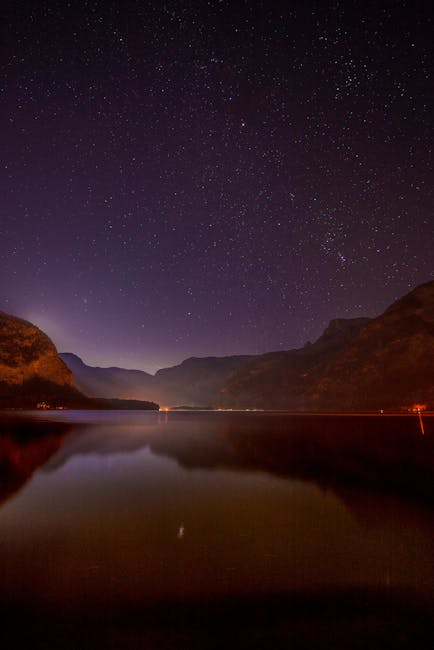
Technical tips: at altitude, light shifts quickly — prepare settings in advance (manual white balance or “shade/warm” presets), have batteries and memory cards ready, and use graduated filters to balance a bright sky with darker foregrounds. If you want to capture stars after dusk, Mottarone can offer relatively low light pollution; use a 24–35 mm lens, apertures around f/2.8–f/4, and exposures of 15–30 seconds depending on ISO.
Recommended gear and settings for dusk
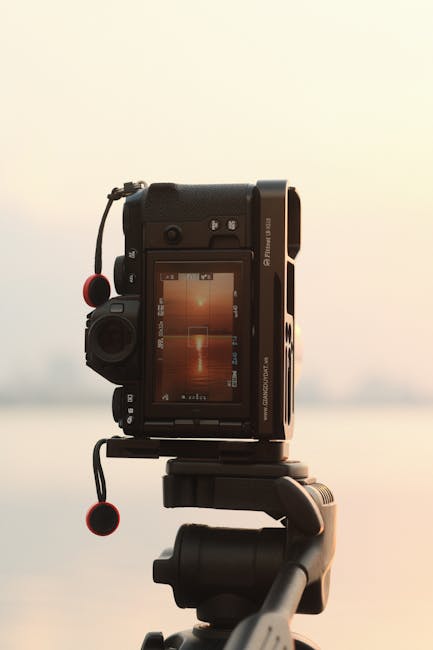
- Sturdy tripod: essential for long exposures at low ISO (0.5–10 s and more).
- Lenses: 16–35 mm for panoramas, 24–70 mm for versatility, 70–200 mm to isolate details and silhouettes (200–400 mm useful from the shore).
- Filters: polarizer to reduce reflections, graduated ND to balance sky and water.
- Accessories: remote release, spare battery(ies), microfiber cloths to wipe lake humidity.
- Settings: shoot RAW, manual white balance, aperture-priority (f/8–f/11 for depth), and bracket exposures if working for HDR.
Logistics, safety and local tips
Planning a dusk photo session around Lake Maggiore takes a bit of organization. Here’s practical information and local advice to optimize your shoots:
- Transport and parking: Main stations are Stresa (Stazione FS di Stresa, Piazza Giovanni XXIII, 28838 Stresa VB) and Verbania (Stazione di Verbania-Pallanza). Public lakeside parking is generally paid in high season (≈ €2–€4/hour). For longer stays, expect €6–€15 per day depending on location. Arrive early if you’re targeting popular spots like Stresa or Villa Taranto.
- Boats and schedules: navigation services (Navigazione Laghi / Gestione Navigazione) typically run from 08:00 to 19:00/20:00 in summer. For special sunset crossings, look for evening excursions or book a private boat taxi (prices vary, often €100–€250 depending on duration and distance).
- Seasonality: High season: May–September — longer light, more services but more people. Low season: October–March — lower prices, misty atmospheres and often more dramatic sunsets but fewer boat services.
- Safety: Wet rocky shores and slippery algae — non-slip-soled shoes recommended. Respect signs and fences around historic or fragile zones (Castelli di Cannero, private ruins, etc.).
- Weather and light timing: check the exact sunset time and the weather forecast. Best colors often follow a warm afternoon and high thin clouds; avoid fully overcast evenings if you’re after blazing skies.
Shooting after sunset and creative ideas
Dusk is just the beginning: the blue hour gives a uniform, deep tone ideal for calm images and cool palettes, while the moments right after sunset let you capture the gradual lighting of urban lights and facades. Here are creative ideas to try:
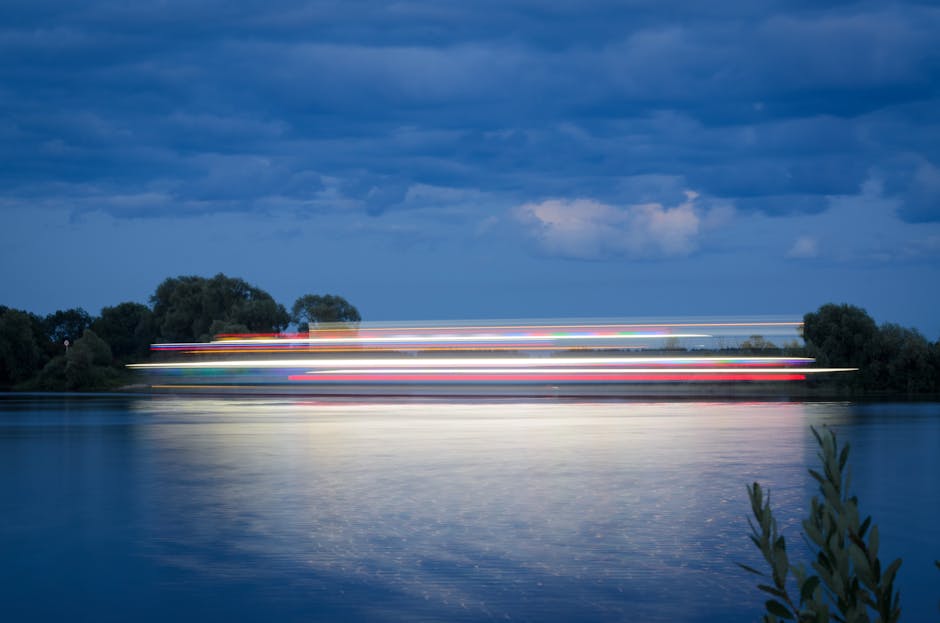
- Long exposures: with tripod and long shutter times (10–30 s), boats leave light trails and water turns silky — for example, shoot from Stresa’s lungolago with a boat leaving the port and Isola Bella in the background.
- Human silhouettes: include passersby or fishermen to give scale and narrative to your images (always ask permission for tight portraits).
- Symmetrical reflections: after a calm sunset, use the water surface to mirror your main subject — villas, palazzi or castle towers.
- HDR and bracketing: for very high-contrast scenes (for instance a lit palace against a still-bright sky), shoot 3–5 exposures and blend in post to preserve shadow and highlight detail.
For astronomy enthusiasts, some clear nights at Mottarone allow you to move from sunset to star photography: plan according to the moon phase (new moon for the Milky Way, crescent for gentle landscape illumination). Also consider a narrative approach: build a series documenting the day→night transition at a single spot (Isola Bella, Cannero, Villa Taranto) — it makes for a coherent portfolio.
Conclusion — Showcasing Lake Maggiore’s fleeting spectacle
Shooting fiery sunsets on Lake Maggiore means capturing the interplay of water, architecture, vegetation and ever-changing light. Each location covered here — the Borromean Islands (Isola Bella, Isola dei Pescatori), Stresa and its promenade, Villa Taranto’s gardens in Verbania, the Castelli di Cannero ruins, the Mottarone panorama and Arona’s Rocca — offers its own temporal and visual composition palette. The addresses, hours and indicative prices provided will help you plan sessions, anticipate logistics and get to the right spot at the right time. Keep season and weather in mind: high season makes services more accessible but increases crowds, while low season reveals more intimate and often more dramatic moods.
On the ground, prioritize preparation: arrive early, secure parking, take time to explore multiple angles, and set up a tripod and appropriate settings. Ferries and boat taxis give access to viewpoints impossible from shore — book ahead if you want a sunset crossing. Respect local rules and the environment: some areas are fragile or private; support sites by paying entrance fees and spending locally if you use island restaurants or services.
Finally, leave room for experimentation: switch focal lengths, play with long exposures, try backlighting, and be ready to capture the instant when the sky shifts from gold to deep blue. Lake Maggiore never gives the same sunset twice — that variability is what makes it an endless source of inspiration. Take this guide as a roadmap, but let creativity and serendipity lead your images: often the most memorable shot is the one you didn’t plan.